Concierge Smart Cart
The Opportunity
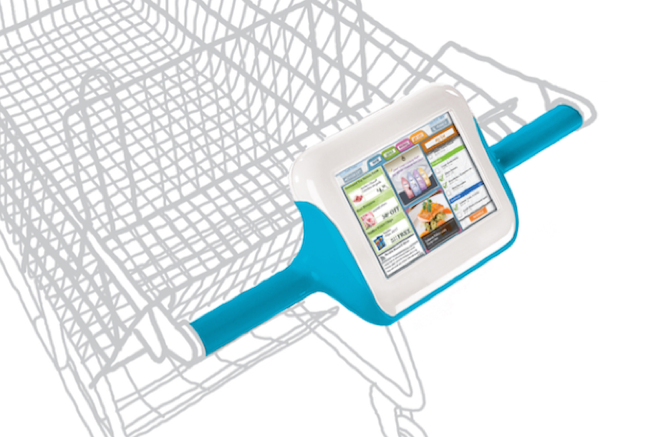
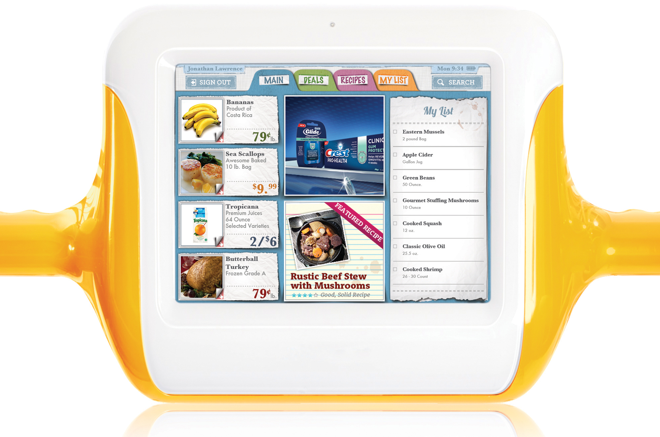
Mercatus Concierge was an early attempt to transform the in-store grocery shopping experience by combining a shopping cart with an onboard tablet that allowed customers to build shopping lists, scan products, check prices, receive product information, and complete checkout. Developed before smartphones and tablets became commonplace, the project aimed to increase basket size, improve customer convenience, reduce checkout friction, and provide grocery retailers with new insights into customer shopping behaviour.
Discovery & Design
Research into customer shopping behaviour revealed that people approached grocery shopping in very different ways. Some shoppers completed a single large weekly shop, while others made multiple smaller trips based on convenience or immediate needs. Price influenced some purchasing decisions, while others were driven more by convenience or perceived value. These insights helped shape an experience that supported different shopping styles rather than assuming every customer followed the same path.
One of the greatest design challenges was introducing entirely new behaviours. Customers were accustomed to shopping with paper lists and had little experience using digital devices while moving through a grocery store. The experience therefore focused on making shopping lists, product information, scanning, and checkout feel like natural extensions of existing shopping habits, while balancing retailer concerns around trust and loss prevention.
The Outcome
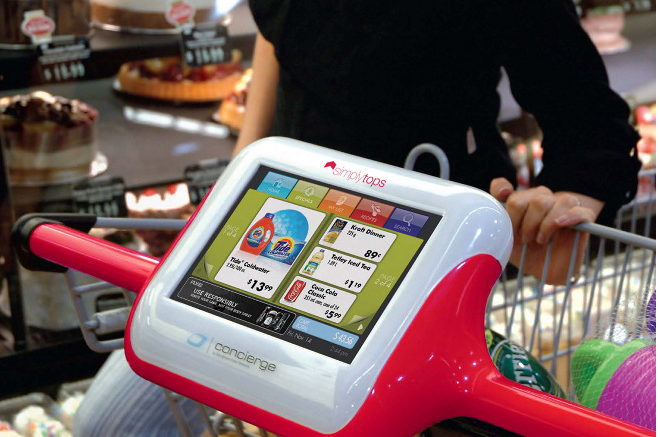
The project was successfully piloted with grocery retailers and demonstrated the potential of digitally assisted shopping, although the available technology limited some capabilities, including accurate in-store positioning and contextual promotions. Looking back, the most valuable outcome was not the hardware itself but the understanding of customer shopping behaviours and information needs. Those insights proved directly transferable to later web and mobile grocery experiences, where widespread smartphone adoption enabled much higher customer acceptance and significantly broader adoption.